
Purpose, product and commercial model
Inside Crashed Cars.
Salvage vehicle classifieds and repair-parts retail
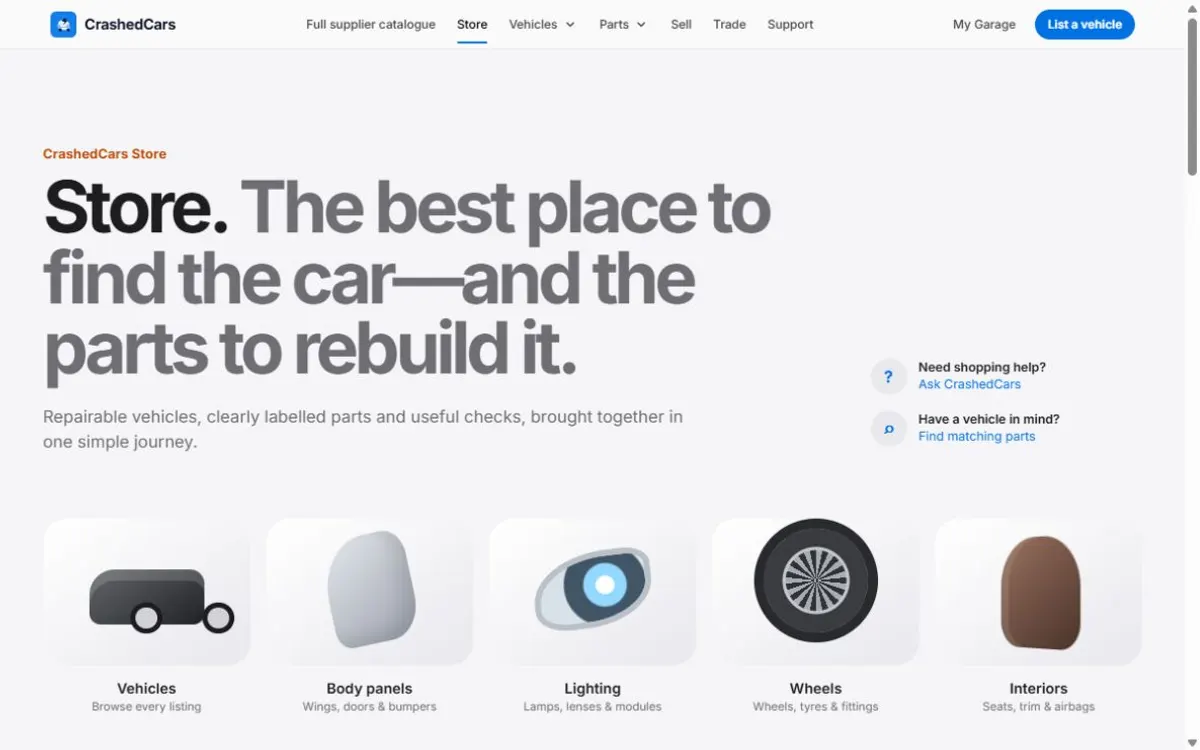
Crashed Cars is planned as a classified marketplace for accident-damaged, salvage and non-running vehicles sold by trade and private advertisers. The platform itself is not a party to vehicle sales. Its distinctive commercial layer is first-party parts retail: a vehicle page can show compatible repair parts currently available for that model, helping buyers estimate repair cost while creating immediate store revenue. The plan starts with free listings to build liquidity, then adds paid listings, trade packages and promotional upgrades, with a longer-term path into repair and warehouse operations.
Who the business serves
The business serves private and trade sellers of damaged, salvage and non-running vehicles, and buyers looking for repairable stock. Repairers, dismantlers and parts buyers are adjacent audiences. The intended value is helping someone understand a vehicle's condition, contact its seller and consider the parts required before committing to a project.
Product and operating model
Vehicle listings combine photographs, condition and damage information, location and seller contact routes. The distinctive plan connects a vehicle advert to relevant repair parts in the attached store. This can support repair-cost research and move a buyer from browsing a car into buying components. The vehicle-classifieds layer introduces buyers and sellers; it does not itself become the seller of every advertised vehicle. Parts retail has its own stock, compatibility and fulfilment responsibilities.
Intended revenue streams
The commercial model below describes the intended ways this business can earn income. It does not represent verified sales, customers or recurring revenue.
- Parts retail margin
- Product sales from the integrated parts store are the initial commercial engine while vehicle listing density is developed.
- Listing fees and promotion
- Paid adverts, featured placements and visibility upgrades are later options after the free launch establishes demand.
- Trade packages
- Recurring dealer tools, bulk listings and stock-management access are intended for repeat professional advertisers.
Development intentions
Build useful vehicle supply and reliable parts matching first, then introduce paid seller products without undermining marketplace activity. Repair and warehouse services are a later expansion path. Listings, sale history and physical operating assets should be assessed separately during acquisition.
Description basis: Business-plan review, reconciled with the current portfolio direction.
Reviewed 7 October 2026. The sections explain product direction and commercial intentions. Delivered features, active agreements and earnings are assessed separately during acquisition.