
Purpose, product and commercial model
Inside PC Market.
Specialist PC hardware commerce
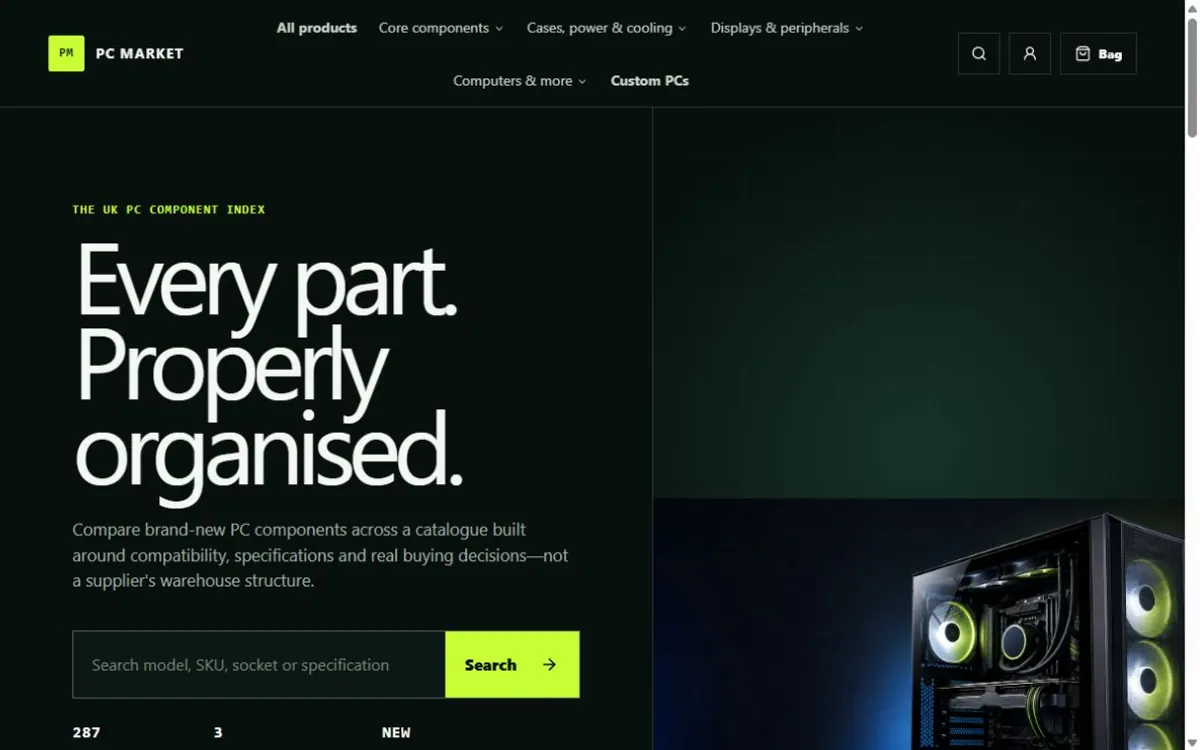
PC Market begins as a commerce-led hardware brand for budget AI users, active traders and buyers who value tested used, refurbished or clearance components. It sells build-to-order systems, selected parts and available surplus stock, supported by build, teardown, repair and benchmark content that demonstrates technical credibility. Direct product margin and deposits are the early financial engine. Once trust, buyer demand and grading rules are proven, approved third-party sellers can be added through a curated marketplace model.
Who the business serves
Budget AI users, active traders and value-focused PC buyers are the initial customers. They want workload-appropriate systems and tested components rather than a generic gaming configuration. Customers comfortable with used or refurbished hardware are an important audience where condition and performance evidence are clear.
Product and operating model
The first model sells build-to-order systems, selected components and clearance or used items. Build videos, teardown content and benchmarks create technical credibility around products actually supplied. Testing, grading, component substitutions, warranty scope and lead times support informed buying. The long-term plan adds approved third-party sellers only after the operator has reliable commerce and dispute processes.
Intended revenue streams
The commercial model below describes the intended ways this business can earn income. It does not represent verified sales, customers or recurring revenue.
- System and component sales
- Margin on complete builds, components, used stock and carefully sourced clearance hardware.
- Labour and setup services
- Build work, installations and workload-oriented setup can be separately quoted.
- Useful hardware bundles
- Upgrades and supporting accessories add value around the buyer's intended use.
- Later marketplace income
- Seller commissions, professional packages and labelled promotion can follow a proven curated marketplace.
Development intentions
Remain commerce-led first, with content supporting actual product demand. Develop testing and fulfilment standards before opening marketplace supply. Hardware ownership, component stock, workshop capability and third-party seller rights must be separated from the digital brand in the final asset agreement.
Description basis: Business-plan review, reconciled with the current portfolio direction.
Reviewed 7 October 2026. The sections explain product direction and commercial intentions. Delivered features, active agreements and earnings are assessed separately during acquisition.